Online first
About the Journal
Current issue
Archive
Publication Ethics
Anti-Plagiarism system
Instructions for Authors
Instructions for Reviewers
Editorial Office
Editorial Board
Contact
Reviewers
All Reviewers
2025
2024
2023
2022
2021
2020
2019
2018
2017
2016
General Data Protection Regulation (RODO)

REVIEW PAPER
Impact of osteopathic management in infantile colic – a systematic review
1
Institute of Health Sciences, Department of Rehabilitation and Wellness, Pomeranian University, Słupsk, Poland
2
Faculty of Health Sciences, Medical University of Silesia, Katowice, Poland
Corresponding author
Jakub Pawłowski
Institute of Health Sciences, Department of Rehabilitation and Wellness, Pomeranian University in Slupsku, Arciszewskiego 22A, 76-200, Słupsk
Institute of Health Sciences, Department of Rehabilitation and Wellness, Pomeranian University in Slupsku, Arciszewskiego 22A, 76-200, Słupsk
J Pre Clin Clin Res. 2025;19(4):183-188
KEYWORDS
TOPICS
ABSTRACT
Introduction and objective:
Infantile colic is one of the most common functional disorders in early infancy, affecting between 10% - 40% of infants in the first months of life (Savino, 2007). It is characterized by repeated episodes of intense crying without an apparent organic cause, lasting at least three hours a day, for three days a week, for a minimum of three weeks. The aim of this review is to analyze the effectiveness of osteopathy in the treatment of infant colic based on scientific research from the last five years
Review methods:
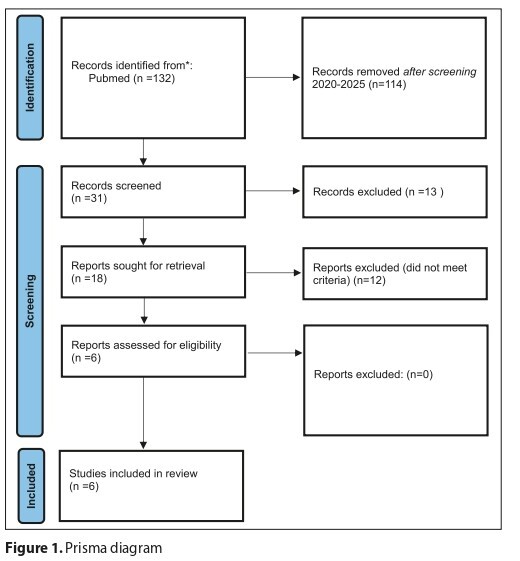
The literature review was conducted using the PubMed database, selecting articles published within the last five years. The key words used included: osteopathy, infantile colic, manual therapy, crying duration, sleep improvement, randomized controlled trial. The search was limited to experimental studies, including randomized controlled trials (RCTs).
Brief description of the state of knowledge:
5 out of 6 studies demonstrated a statistically significant reduction in crying time for infants undergoing osteopathic therapy, with a decrease ranging from 30 minutes to 2.5 hours per day. Infants receiving osteopathic therapy slept longer, experienced fewer night-time awakenings, and had better sleep quality. Osteopathy contributed to the reduction of bloating, gas, and improvement of bowel peristalsis. Osteopathic therapy also significantly reduced stress levels in the parents of infants suffering from colic
Summary:
Analysis of the literature indicated that osteopathy may be an effective adjunctive method for the treatment of infantile colic. The reviewed studies showed that osteopathic techniques, such as cranio-sacral therapy, visceral therapy, and musculo-skeletal mobilization may contribute to the reduction of colic symptoms, including shortening the duration of crying episodes and improving sleep quality in infants.
Infantile colic is one of the most common functional disorders in early infancy, affecting between 10% - 40% of infants in the first months of life (Savino, 2007). It is characterized by repeated episodes of intense crying without an apparent organic cause, lasting at least three hours a day, for three days a week, for a minimum of three weeks. The aim of this review is to analyze the effectiveness of osteopathy in the treatment of infant colic based on scientific research from the last five years
Review methods:
The literature review was conducted using the PubMed database, selecting articles published within the last five years. The key words used included: osteopathy, infantile colic, manual therapy, crying duration, sleep improvement, randomized controlled trial. The search was limited to experimental studies, including randomized controlled trials (RCTs).
Brief description of the state of knowledge:
5 out of 6 studies demonstrated a statistically significant reduction in crying time for infants undergoing osteopathic therapy, with a decrease ranging from 30 minutes to 2.5 hours per day. Infants receiving osteopathic therapy slept longer, experienced fewer night-time awakenings, and had better sleep quality. Osteopathy contributed to the reduction of bloating, gas, and improvement of bowel peristalsis. Osteopathic therapy also significantly reduced stress levels in the parents of infants suffering from colic
Summary:
Analysis of the literature indicated that osteopathy may be an effective adjunctive method for the treatment of infantile colic. The reviewed studies showed that osteopathic techniques, such as cranio-sacral therapy, visceral therapy, and musculo-skeletal mobilization may contribute to the reduction of colic symptoms, including shortening the duration of crying episodes and improving sleep quality in infants.
Pawłowski J, Pawłowska K, Pudołek A. The impact of osteopathic management in infantile colic: A systematic review. J Pre Clin Clin Res.
2025;19(4):183–188. doi:10.26444/jpccr/215870
REFERENCES (10)
3.
Indrio F, Di Mauro A, Riezzo G, et al. Prophylactic Use of a Probiotic in the Prevention of Colic, Regurgitation, and Functional Constipation. JAMA Pediatr. 2014;168:228.
4.
Hestbaek L, Hartvigsen J, Christensen H, Vach W. Osteopathy and chiropractic treatment in babies with infantile colic. Acta Paediatr. 2023;112:2239–40.
5.
Martínez-Lentisco M del M, Martín-González M, García-Torrecillas JM, et al. Osteopathic Manual Therapy for Infant Colic: A Randomised Clinical Trial. Healthcare. 2023;11:2600.
6.
Holm LV, Jarbøl DE, Christensen HW, et al. The effect of chiropractic care on infantile colic: results from a single-blind randomised controlled trial. Chiropr Man Therap. 2021;29:15.
7.
Schwerla F, Zimmer M, Göpfert J, et al. Osteopathic treatment of infants with infantile colic/excessive crying: a prospective, multicentric, randomized controlled trial and nested observational trial. BMC Pediatr. 2025;25:77.
8.
Castejón-Castejón M, Murcia-González MA, Todri J, Lena O, Chillón-Martínez R. Treatment of infant colic with craniosacral therapy. A randomized controlled trial. Complement Ther Med. 2022;71:102885.
9.
Ceballos-Laita L, Ernst E, Carrasco-Uribarren A, et al. Is Craniosacral Therapy Effective? A Systematic Review and Meta-Analysis. Healthcare. 2024;12:679.
10.
Ateş Beşirik S, Geçkil E. The effect of therapeutic touch on colic symptoms in infantile colic infants: A randomised controlled study. J Paediatr Child Health. 2024;60:569–78.
| eISSN: | 1898-7516 |
| ISSN: | 1898-2395 |

We process personal data collected when visiting the website. The function of obtaining information about users and their behavior is carried out by voluntarily entered information in forms and saving cookies in end devices. Data, including cookies, are used to provide services, improve the user experience and to analyze the traffic in accordance with the Privacy policy. Data are also collected and processed by Google Analytics tool (more).
You can change cookies settings in your browser. Restricted use of cookies in the browser configuration may affect some functionalities of the website.
You can change cookies settings in your browser. Restricted use of cookies in the browser configuration may affect some functionalities of the website.