Online first
About the Journal
Current issue
Archive
Publication Ethics
Anti-Plagiarism system
Instructions for Authors
Instructions for Reviewers
Editorial Office
Editorial Board
Contact
Reviewers
All Reviewers
2025
2024
2023
2022
2021
2020
2019
2018
2017
2016
General Data Protection Regulation (RODO)

CASE REPORT
Unusual presentations of large mature ovarian teratomas in adolescents
1
Student Scientific Association at the Department of Paediatric and Adolescent Gynaecology, Medical University, Lublin, Poland
2
Department of Paediatric and Adolescent Gynaecology, Medical University, Lublin, Poland
Corresponding author
Zuzanna Helena Skiba
Student Scientific Association at the Department of Pediatric and Adolescent Gynecology, Medical University of Lublin, Poland, Poland
Student Scientific Association at the Department of Pediatric and Adolescent Gynecology, Medical University of Lublin, Poland, Poland
J Pre Clin Clin Res. 2026;20(3):131-136
KEYWORDS
adolescentfertility preservationmature ovarian teratomaimmature ovarian teratomalaparascopic surgery
TOPICS
ABSTRACT
Introduction:
Mature cystic teratoma (MCT) is the most common ovarian neoplasm in young women. It is comprised of mature tissues derived from three germ layers: ectoderm, mesoderm and endoderm. Typically, its clinical presentation includes slow growth and benign nature.
Case Reports:
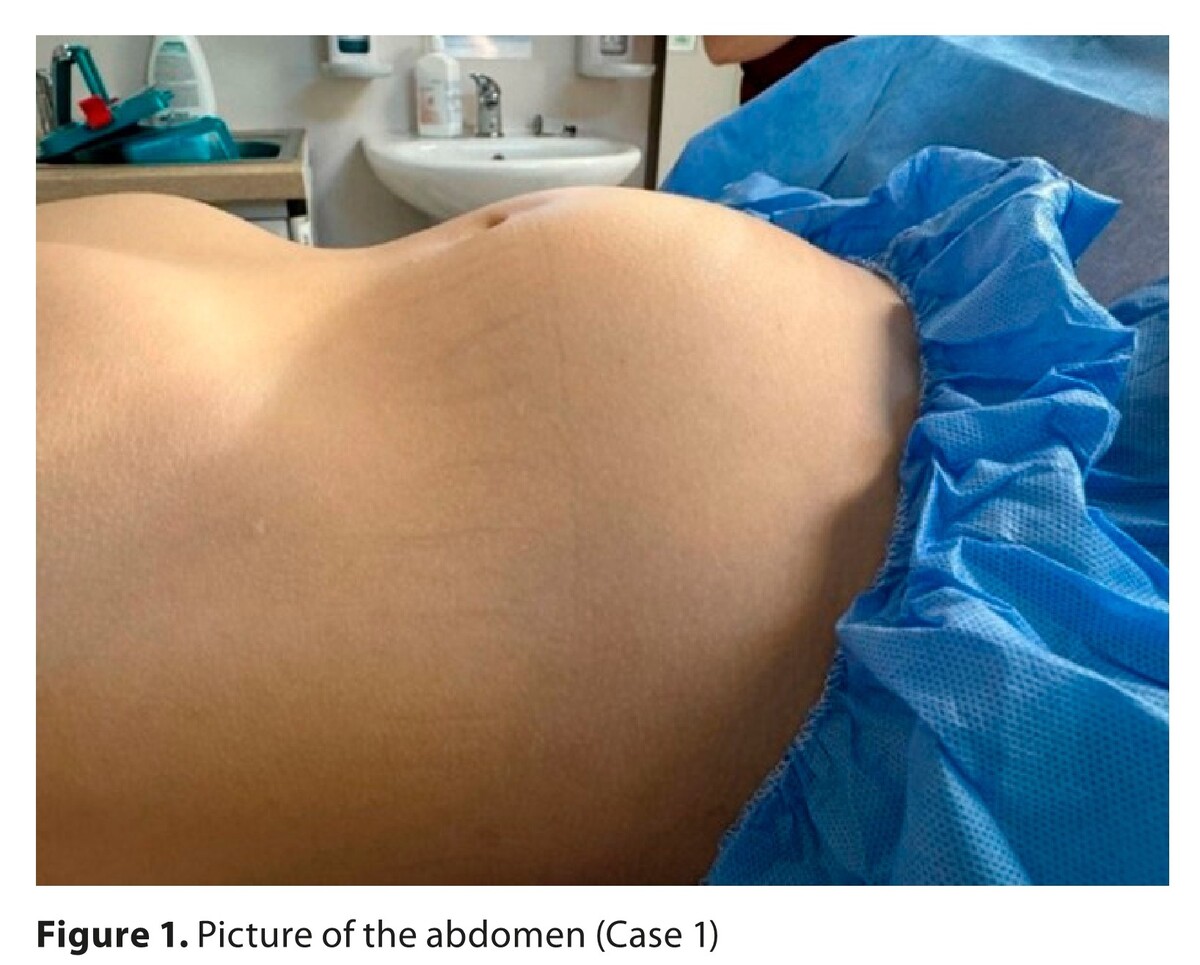
Three case reports are presented of adolescents with unusual presentations of MCT, who were successfully treated by laparoscopy.
Conclusions:
Slow growth, small size, specific symptoms, and typical ultrasound features of MCTs assist in distinguishing them from immature teratomas, but do not provide a definitive diagnosis. Comprehensive preoperative assessment and careful surgical planning are essential. These cases demonstrate that laparoscopic ovarian-sparing surgery can be a safe and effective treatment, even for very large lesions, while preserving future fertility.
Mature cystic teratoma (MCT) is the most common ovarian neoplasm in young women. It is comprised of mature tissues derived from three germ layers: ectoderm, mesoderm and endoderm. Typically, its clinical presentation includes slow growth and benign nature.
Case Reports:
Three case reports are presented of adolescents with unusual presentations of MCT, who were successfully treated by laparoscopy.
Conclusions:
Slow growth, small size, specific symptoms, and typical ultrasound features of MCTs assist in distinguishing them from immature teratomas, but do not provide a definitive diagnosis. Comprehensive preoperative assessment and careful surgical planning are essential. These cases demonstrate that laparoscopic ovarian-sparing surgery can be a safe and effective treatment, even for very large lesions, while preserving future fertility.
PEER REVIEW INFORMATION
Article has been screened for originality
Skiba ZH, Siwek A, Torres A. Unusual presentations of large mature ovarian teratomas in adolescents. J Pre Clin-Clin Res. 2026;20(3):131–136. doi:10.26444/jpccr/226321
REFERENCES (33)
1.
Birbas E, Kanavos T, Gkrozou F, et al. Ovarian Masses in Children and Adolescents: A Review of the Literature with Emphasis on the Diagnostic Approach. Children (Basel). 2023;10(7):1114. 10doi:10.3390/CHILDREN10071114.
2.
Lala S V, Strubel N. Ovarian neoplasms of childhood. Pediatr Radiol. 2019;49:1463–1475. doi:10.1007/S00247-019-04456-8.
3.
Höhn AK, Brambs CE, Hiller GGR, et al. 2020 WHO Classification of Female Genital Tumors. Geburtshilfe Frauenheilkd. 2021;81:1145–1153. doi:10.1055/A-1545-4279.
4.
Stankovic ZB, Bjelica A, Djukic MK, Savic D. Value of ultrasonographic detection of normal ovarian tissue in the differential diagnosis of adnexal masses in pediatric patients. Ultrasound Obstet Gynecol. 2010;36:88–92. doi:10.1002/UOG.7557.
5.
Wu SY, Giannini A, Girardo M, et al. Malignant Transformation of Squamous Cell Carcinoma in Mature Cystic Teratoma of the Ovary: A Systematic Review and Meta-Analysis of Data. Gynecol Obstet Invest. 2025;90:255–267. doi:10.1159/000542672.
6.
Tarca E, Trandafir LM, Cojocaru E, et al. Diagnosis Difficulties and Minimally Invasive Treatment for Ovarian Masses in Adolescents. Int J Womens Health. 2022;14:1047–1057. doi:10.2147/IJWH.S374444.
7.
Gkrozou F, Tsonis O, Vatopoulou A, et al. Ovarian Teratomas in Children and Adolescents: Our Own Experience and Review of Literature. Children (Basel). 2022;9(10):1571.doi:10.3390/CHILDREN9101571.
8.
Rathore R, Sharma S, Arora D. Spectrum of Childhood and Adolescent Ovarian Tumors in India: 25 Years Experience at a Single Institution. Open Access Maced J Med Sci. 2016;4:551–555. doi:10.3889/OAMJMS.2016.090.
9.
Grisales-Gallo JE, Salinas-Castro KJ, Nasner D, Toro-Gutiérrez JS. Mature cystic teratoma overlapping with giant serous cystadenoma of the ovary: A case report. Radiol Case Rep. 2024;19:218–222. doi:10.1016/j.radcr.2023.10.030.
10.
Stanković ZB, Dural O. A maturing approach to the assessment of ovarian teratomas. Best Pract Res Clin Obstet Gynaecol. 2026;105:102701. doi:10.1016/J.BPOBGYN.2026.102701.
11.
Heo SH, Kim JW, Shin SS, et al. Review of ovarian tumors in children and adolescents: radiologic-pathologic correlation. Radiographics. 2014;34:2039–2055. doi:10.1148/RG.347130144.
12.
Sahin H, Abdullazade S, Sanci M. Mature cystic teratoma of the ovary: a cutting edge overview on imaging features. Insights Imaging. 2017;8:227–241. doi:10.1007/S13244-016-0539-9.
13.
Stanković ZB, Sedlecky K, Savić D, et al. Ovarian Preservation from Tumors and Torsions in Girls: Prospective Diagnostic Study. J Pediatr Adolesc Gynecol. 2017;30:405–412. doi:10.1016/j.jpag.2017.01.008.
14.
Gil LA, Lutz CM, Dillon PA, et al. Use and Accuracy of Intraoperative Frozen Section Analysis for Ovarian Masses in Children and Adolescents. J Pediatr Adolesc Gynecol. 2023;36:155–159. doi:10.1016/j.jpag.2022.10.001.
15.
Bae J, Kim HK, Lee I, et al. Clinical Features of Surgically Managed Adnexal Masses in Children and Adolescents at a Tertiary Referral Center. Children. 2026;13:549. doi:10.3390/CHILDREN13040549/S1.
16.
Epstein K, Dillman J, Abu Ata N, et al. Assessment of ultrasound ovarian-adnexal reporting & data system (O-RADS) for pediatric patients. Pediatr Radiol. 2026;56:856–866. doi:10.1007/S00247-026-06546-W.
17.
Cong L, Wang S, Yeung SY, et al. Mature Cystic Teratoma: An Integrated Review. Int J Mol Sci. 2023;24(7):6141doi:10.3390/IJMS24076141.
18.
Spinelli C, Strambi S, Masoni B, et al. Surgical management of ovarian teratomas in childhood: a multicentric study on 110 cases and a literature review. Gynecol Endocrinol. 2021;37:950–954. doi:10.1080/09513590.2021.1948527.
19.
Tankou J, Foley OW, Liu CY, et al. Dermoid cyst management and outcomes: a review of over 1000 cases at a single institution. Am J Obstet Gynecol. 2024;231:442.e1–442.e7. doi:10.1016/j.ajog.2024.04.021.
20.
Pecorelli S, Tonegatti uca G, Stern MV, et al. Management of Large Pediatric and Adolescent Ovarian Neoplasms with a Leak-Proof Extracorporeal Drainage Technique: Our Experience Using a Hybrid Minimally Invasive Approach. J Pediatr Adolesc Gynecol. 2021;34:394–399. doi:10.1016/j.jpag.2020.08.009.
21.
Raźnikiewicz A, Korlacki W, Grabowski A. The role of laparoscopy in paediatric and adolescent gynaecology. Wideochir Inne Tech Maloinwazyjne. 2020;15:424–436. doi:10.5114/WIITM.2020.97817.
22.
Guillén G, Martín-Giménez MP, López-Fernández S, et al. Results of Ovarian Sparing Surgery in Pediatric Patients: Is There a Place for Laparoscopy? J Laparoendosc Adv Surg Tech A. 2020;30:458–463. doi:10.1089/LAP.2019.0515.
23.
Knaus ME, Onwuka AJ, Afrazi A, Breech L, et al. Laparoscopy versus laparotomy for pediatric ovarian dermoids. J Pediatr Surg. 2022;57:1008–1012. doi:10.1016/j.jpedsurg.2022.01.053.
24.
Lee SR. Fast Leak-Proof, Intraumbilical, Single-Incision Laparoscopic Ovarian Cystectomy for Huge Ovarian Masses: Hybrid Cystectomy and Reimplantation Method. Medicina. 2021;57(7):680. doi:10.3390/MEDICINA57070680.
25.
Shaltout MF, Maged AM, Abdella R, et al. Laparoscopic guided minilaparotomy: a modified technique for management of benign large ovarian cysts. BMC Womens Health. 2022;22(1):269 . doi:10.1186/S12905–022–01853–4.
26.
Trotman G, Foley C, Taylor J, et al. Postoperative Outcomes among Pediatric and Adolescent Patients Undergoing Minilaparotomy vs Laparoscopy in the Management of Adnexal Lesions. J Pediatr Adolesc Gynecol. 2017;30:632–635. doi:10.1016/j.jpag.2017.06.009.
27.
Sireesha M, Chitra T, Subbaiah M, Nandeesha H. Effect of Laparoscopic Ovarian Cystectomy on Ovarian Reserve in Benign Ovarian Cysts. J Hum Reprod Sci. 2021;14:56–60. doi:10.4103/JHRS.JHRS_94_20.
28.
Zhang X, Yang J, Wang J, et al Early stage ovarian immature teratoma, surveillance or chemotherapy after surgery? A propensity score matched analysis. Gynecol Oncol Rep. 2022;40. doi:10.1016/j.gore.2022.100976.
29.
Zhao T, Liu Y, Wang X, et al. Ovarian cystectomy in the treatment of apparent early-stage immature teratoma. J Int Med Res. 2017;45:771–780. doi:10.1177/0300060517692149.
30.
Lešková J, Kříž JT, Štichhauer R. Bilateral Mature Ovarian Teratoma with Torsion in a Premenarchal Girl. Acta Medica (Hradec Kralove). 2022;65:33–36. doi:10.14712/18059694.2022.14.
31.
Won S, Choi SH, Lee N, et al. Ovarian Reserve After Robotic Versus Laparoscopic Single-Site Ovarian Cystectomy for Mature Cystic Teratoma: A Prospective Comparative Study. J Clin Med. 2025;14(11):3800. doi:10.3390/JCM14113800.
32.
Baracat CMF, Abdalla-Ribeiro HSA, Araujo RSDC, et al. The Impact on Ovarian Reserve of Different Hemostasis Methods in Laparoscopic Cystectomy: A Systematic Review and Meta-analysis. Rev Bras Ginecol Obstet. 2019;41:400–408. doi:10.1055/S-0039–1692697.
33.
Pashankar F, Murray MJ, Gell J, et al. Consensus and controversy in the management of paediatric and adult patients with ovarian immature teratoma: the Malignant Germ Cell International Consortium perspective. E Clin Med. 2024;69. doi:10.1016/j.eclinm.2024.102453.
| eISSN: | 1898-7516 |
| ISSN: | 1898-2395 |

We process personal data collected when visiting the website. The function of obtaining information about users and their behavior is carried out by voluntarily entered information in forms and saving cookies in end devices. Data, including cookies, are used to provide services, improve the user experience and to analyze the traffic in accordance with the Privacy policy. Data are also collected and processed by Google Analytics tool (more).
You can change cookies settings in your browser. Restricted use of cookies in the browser configuration may affect some functionalities of the website.
You can change cookies settings in your browser. Restricted use of cookies in the browser configuration may affect some functionalities of the website.